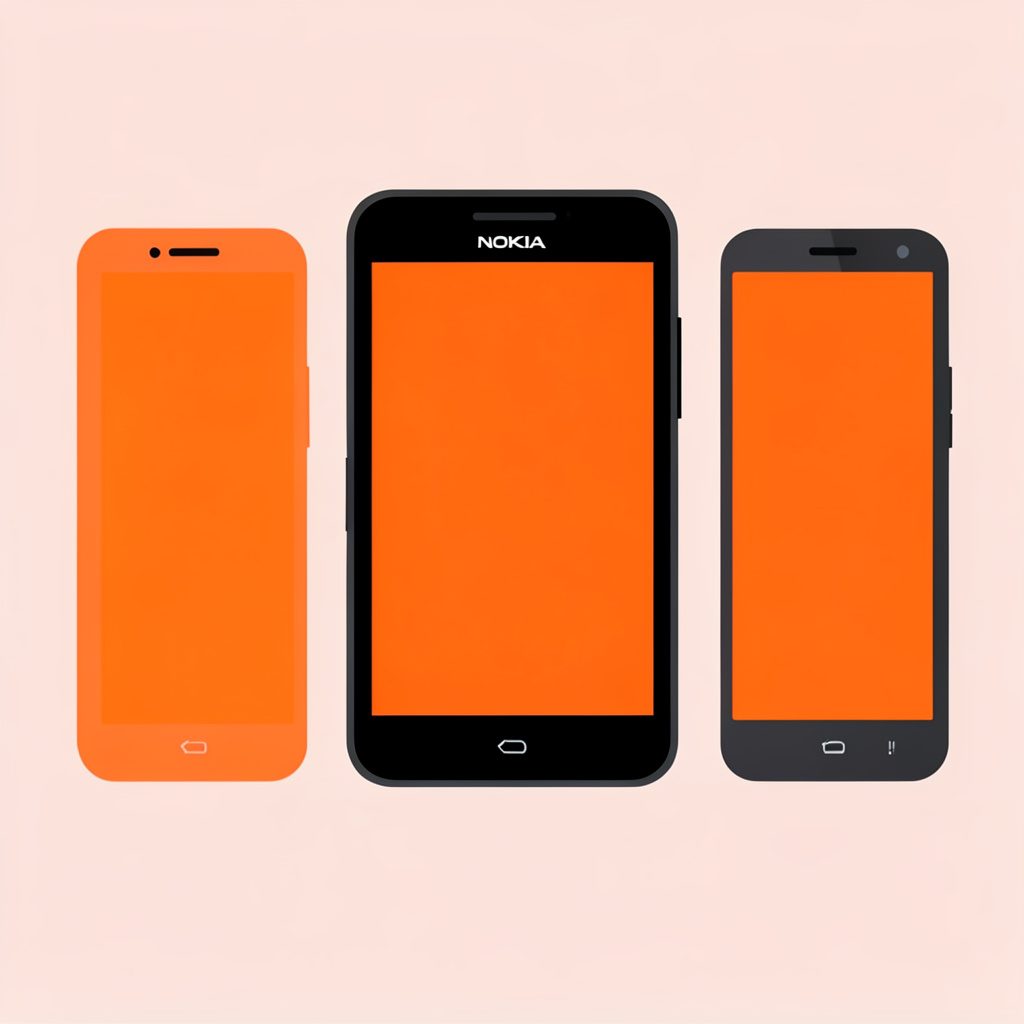
StoriesIO goes beyond standard headlines to deliver deep dives into IoT, Android, smartphones, browsers, and the technologies shaping how we connect.
Coverage That Goes Deeper
Four core areas where StoriesIO spends extra time cutting through the noise.
News
Daily headlines, launches, and industry shifts across the technology sector.
Devices
Smartphone and gadget coverage including Honor, Vivo, Nokia, and modular concepts.
Reviews
Long-form reviews of phones, smartwatches, and apps with honest verdicts.
IoT
How connected devices, browsers, and wearables are reshaping everyday tech.
Why smartphone bezels are returning in 2025
A visible border is returning to some smartphones in 2025 as makers prioritise better durability, but not because they have abandoned edge-to-edge screens. A clearer border is reappearing around certain displays, often paired with a flatter frame and reinforced corners. The change follows a straightforward consumer priority: a phone that survives a drop should not be judged as badly designed because its screen resembles a floating sheet of glass.
The word bezel covers everything between the active display and outer edge, so bezels never truly disappeared. Recent phones merely minimised them, using flexible OLED panels, drilled camera cutouts and curved glass to create a seamless appearance. A clearer border can give designers space for a raised lip, a stronger perimeter and less exposed corner. That extra structure can redirect a fall away from the display, although no border can protect a phone from every impact.
Screen replacement is often the most expensive repair. Once a panel cracks, an inexpensive handset can lose a large share of its value, while a premium model may face a bill that makes accidental-damage insurance or replacement more attractive. A thicker frame can look old-fashioned beside a razor-thin model, yet it may deliver more protection per dollar than another millimetre shaved from an already fragile body.
Australia adds demanding, ordinary use to that calculation. Phones carried on crowded Sydney trains, Melbourne trams and Brisbane buses are repeatedly bumped and dropped; coastal trips expose them to sand and salt, while hot summers test adhesives and batteries. For people working outdoors or travelling through regional areas, a forgiving chassis can be more practical than a polished slab.
A visible frame changes the drop equation
A corner falling onto pavement concentrates force into a small area. On a curved-edge phone, that force can catch the perimeter where the cover glass curves downward, producing the familiar spiderweb that starts at an edge rather than the centre. A flat display held inside a raised frame has a better chance of landing on that frame first. The bezel is not magic; it creates clearance and an impact path.
Two phones can share a nominal screen size while exposing very different amounts of glass. One puts nearly all of its display within a narrow metal border; another leaves room for a pronounced rim and a defined corner. The second may feel less premium at a glance, but its protection is built into the shape rather than added later through a case.
| Display design | Impact behaviour | Main compromise |
|---|---|---|
| Narrow bezel and flat glass | Compact body and clean front face | Corners and edges remain exposed |
| Curved cover glass | Wraparound visual effect | Vulnerable edges and difficult repairs |
| Visible raised bezel | Frame can contact the ground before the panel | More bulk and less active display |
| Rugged reinforced body | Strong shock handling and grip | Weight and a utilitarian appearance |
Durability is becoming a product feature
The connection between smartphone bezels and better durability is becoming a central product argument. Rugged phones have used prominent borders and thick frames for years, so the revival is not a wholly new idea. What has changed is the language surrounding it. Durability now sits beside camera quality, battery life and processor speed in product discussions, especially among Android manufacturers serving the mid-range market.
That makes sense when buyers expect to keep a handset for several years. Software support can make an older phone usable for longer, but a cracked display changes the equation quickly. Australian Consumer Law guarantees cover faults in goods sold for consumer use, yet accidental damage is commonly excluded. Consumers are therefore comparing not only what a phone does on day one, but what happens when it falls in the first month.
Raised edges must work with the whole body
A cosmetic black border cannot stop a crack. Protection comes from a raised lip, a stiff mid-frame and internal support that keeps the display from bending under a point impact. Metal side rails can spread force, while a polymer or composite perimeter can absorb it. Corner height and radius matter as much as nominal material, since a sharp corner concentrates stress where the display is most vulnerable.
The HTC U11 Life is a useful historical reminder that visible top and bottom borders are not new. Its Android One design made the surrounding frame and sensor area explicit rather than hiding them beneath a curved screen. Older handsets often looked that way because component packaging demanded space; a modern manufacturer can now choose the geometry deliberately to gain shock clearance.
Glass still matters. A tougher cover can resist scratches and lower-energy impacts, but even premium strengthened glass can fracture after a short fall onto stone or concrete. Raised edges work best when the display glass sits slightly behind the frame and the adhesive is flexible enough to survive twisting. Without those supporting details, a wider border can simply be extra width without meaningful protection.
Protection ratings need careful reading
An IP rating measures resistance to water and dust under defined test conditions; it is not a drop warranty. A phone can carry a strong ingress rating and still suffer a shattered screen because the two hazards test different structures. Similarly, advertised military survival figures may use controlled drops on smooth surfaces rather than the irregular impacts of a pavement, gym floor or construction site.
Useful specifications therefore connect several claims: the frame material, cover-glass standard, corner design, IP rating and local repair pathway. Replacement cost is equally important. A device with a replaceable screen or widely available parts can recover from damage more cheaply than one whose display is tightly bonded and expensive to service.
None of this makes a bulky handset indestructible. It changes the basis of comparison. Two phones with similar screens and processors may need different cases, produce different repair bills and age very differently. The better-looking device is not automatically the safer one to carry every day.
Australian conditions reward a tougher approach
Local habits make that difference visible. On the crowded platforms of Sydney and Melbourne, or among passengers stepping off Brisbane buses, a phone is often held one-handed and used without a grip. A raised edge reduces the chance that a pavement contact will land directly on the screen. It also offers a physical reminder that the handset is built for friction, not just for a display demonstration.
Coastal use is another factor. Salt-laden air and fine sand can work into seams, while a day at Bondi Beach or along Perth’s foreshore leaves abrasive grains on a glossy rim. Heat adds stress of its own: Brisbane summers can push a handset through thermal cycling as it moves between air conditioning and outdoor humidity, placing repeated stress on seals and adhesives. A robust perimeter helps, but water resistance still needs maintenance.
Outdoor work and travel raise the stakes further. Mining crews, farmers, delivery riders and bushwalkers face gravel, tools and repeated knocks that rarely appear in a studio test. Their phones must also cover long distances, making charging access, battery condition and the availability of replacement parts as important as screen survival.
Price sensitivity strengthens the case. For local purchases, advertised prices generally include the 10% GST, making an expensive screen replacement a meaningful part of ownership. Buyers of imported Android flagships can also face higher shipping and service costs. In that environment, a tougher handset may be the economical choice even when it lacks the thinnest profile or the most uninterrupted front face.
Wider bezels still have real costs
The return of visible borders should not be mistaken for a universal design win. A larger frame reduces the usable display within a given body size, and some older-looking proportions can make a phone feel dated beside a borderless rival. Video, games and split-screen work benefit from every extra millimetre, while thick bezels can make one-handed typing less comfortable on smaller models.
There are engineering trade-offs too. A rigid frame can improve impact handling but add weight, and a broad plastic rim may scuff or discolour with use. Better protection can also complicate screen replacement if the cover glass, touch layer and panel are bundled into an expensive assembly. The useful question is not whether every phone needs a large border, but whether the protection is proportionate and honestly implemented.
Durability becomes the better design benchmark
The wider shift is visible across Android design, where visual continuity once competed with practical construction. For readers following the broader device market, StoriesIO technology coverage provides useful context on how handset makers balance those priorities. The meaningful return of smartphone bezels is not a revival of an old aesthetic; it is the acceptance that edge protection has value even when the active display does not reach every edge.
A durability-focused evaluation in 2025 should look for a frame that stands slightly proud of the cover glass, robust corner geometry and credible drop testing. It should also check the replacement price, local service availability and whether the phone can be repaired without replacing unrelated components. Screen-protection films remain useful for scratches, but they cannot reproduce the structural benefit of a raised perimeter.
Some buyers will still choose a narrow-bezel flagship for its display, camera or compact proportions, and that choice can be perfectly rational. The stronger case belongs to phones that remain usable after the ordinary accidents of Australian daily life. In 2025, a visible border is no longer evidence of an old design; it can be the clearest sign that the phone was built to meet the world outside the showroom.
From The StoriesIO Archive
A look at devices, platforms, and experiments covered across recent reporting.